Florence, 14–15 May 2026 | NANA BIANCA Innovation Center
The Bauhaus4Med project concluded its journey with a landmark two-day Final Conference held on 14–15 May 2026 at the NANA BIANCA Innovation Center in Florence, a venue that, in its spirit of creativity and cross-disciplinary exchange, perfectly embodies the values of the New European Bauhaus (NEB) initiative. The event brought together policymakers, researchers, architects, urban planners, civil society representatives, and local authorities from across the Mediterranean region, marking the culmination of a collaborative effort to reimagine sustainable, inclusive, and aesthetically enriched urban environments.
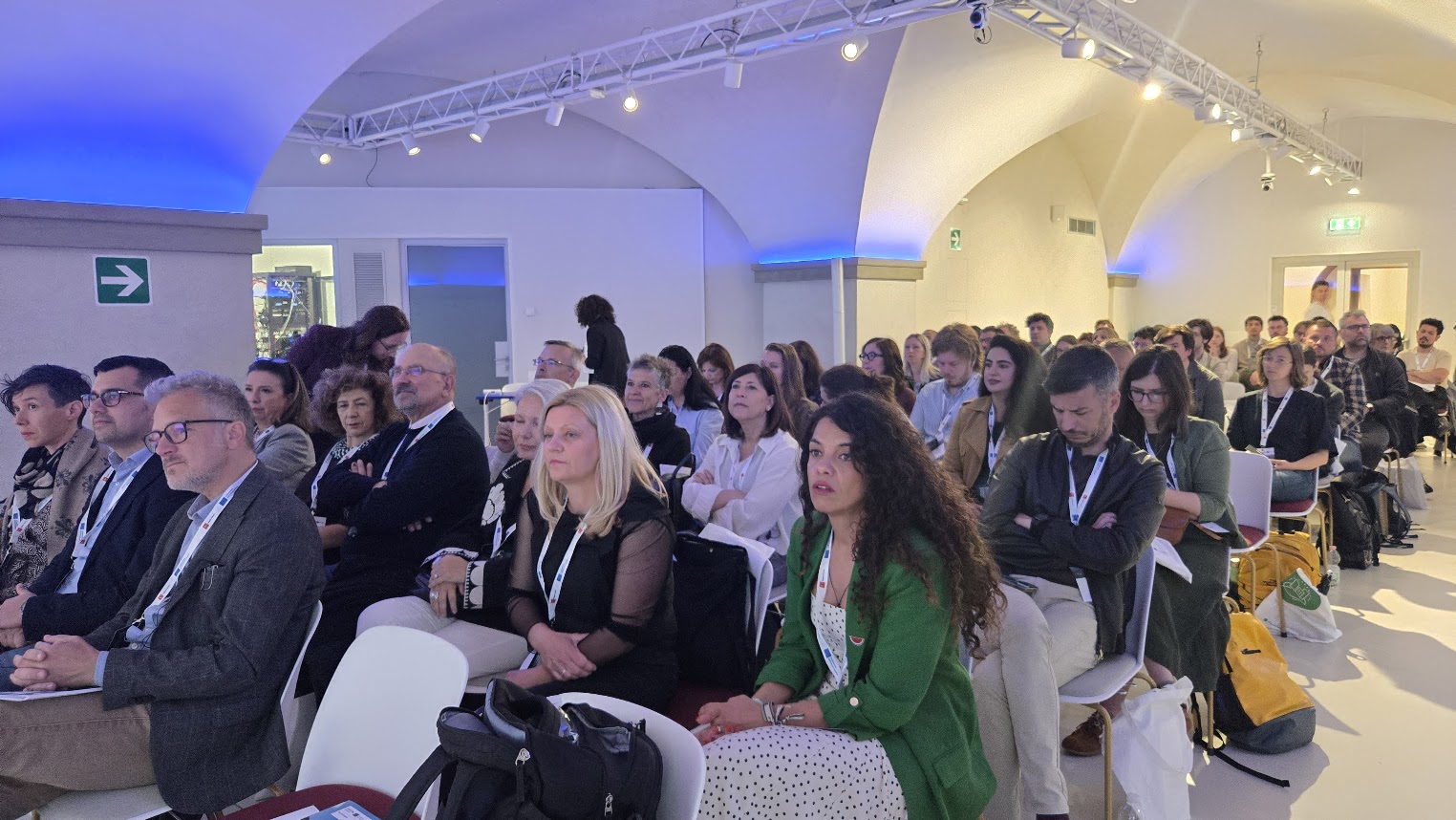
Day One: Ideas in Dialogue
The first day opened with a welcoming ceremony featuring greetings from the Tuscany Region, including Leonardo Marras, Regional Minister of Productive Activities, and Anja Prislan from E-institute, the BAUHAUS4MED coordinator. Representatives of the Interreg Euro-Med Green Living Areas Mission also set the stage for a rich programme of panels and presentations.
The morning sessions were structured around the four thematic pillars at the heart of the Bauhaus4Med vision: Urban Green Transformation, Direct Democracy and Participation, Aesthetic Green Architecture, and Climate Neutral and Resilient Societies. Each pillar was introduced by a Science Community for NEB plenary speaker, followed by a panel of experts, practitioners, and local authorities offering diverse perspectives from Italy, Greece, Croatia, Slovenia, Spain, and Bulgaria.
Among the highlights, Paula Maria Simões (IFLA Europe) opened the proceedings with a reflection on landscape as civic infrastructure, while Prof. Giuseppe De Luca (University of Florence) addressed cooperative governance between NEB projects and local-level scaling. Contributions ranged from urban lidos as biocultural infrastructures in Taranto, to Jane’s Walks as instruments of citizen spatial agency in Zagreb, to student housing as a climate resilience hub in Florence.
The afternoon panels delved into the intersections of architecture, energy, community participation, and ecological restoration, closing with a networking session that animated conversations around shared challenges and future opportunities.
Day Two: Results, Tools, and the Road Ahead
The second day shifted focus to the project’s concrete achievements and forward-looking outlook. Following an update on the Interreg Euro-MED Programme 2021–2027 by Joint Secretariat Coordinator Curzio Cervelli, E-institute presented the overall results and outcomes of the Bauhaus4Med project, opening the floor to questions from participants.
A significant moment came with the presentation of the digital participatory tools developed within the project. Platoniq introduced Crowdvocacy, a platform designed to amplify civic voices and support participatory advocacy in urban decision-making processes. Crowdpolicy presented the NEB Self-Assessment Tool, an instrument enabling communities and institutions to evaluate their alignment with New European Bauhaus principles and identify pathways for improvement.
The afternoon spotlighted the Bauhaus4Med pilot actions — on-the-ground interventions implemented by partners across Tuscany (Italy), Marche (Italy), the Region of Central Macedonia (Greece), the City of Sarajevo (Bosnia and Herzegovina), and Burgas Municipality (Bulgaria). These pilots demonstrated how NEB principles can be translated into tangible, place-based transformations.
The conference also celebrated the Bauhaus4Med Sprint Event, showcasing five winning innovative ideas emerging from the project’s creative process: Aristotle’s Garden (Greece), Soham (Italy), Min.uti (Italy), Situle aquae (Italy), and Our Children² Our Children (Croatia). Presentations of the Local Bauhaus4Med Festivals by IFLA EU and the City of Sarajevo further illustrated the broad cultural and civic resonance the project has generated.
A Shared Vision Moving Forward
The Bauhaus4Med Final Conference was more than a closing event — it was an invitation to continue. The closing ceremony, led by Serena Modric of the Tuscany Region, underscored the importance of carrying forward the project’s insights into future policies, urban strategies, and cross-border collaborations.
As the Mediterranean faces growing pressures from climate change, demographic shifts, and social inequalities, initiatives like Bauhaus4Med offer a compelling model: one grounded in participation, beauty, sustainability, and resilience. Florence, with its own deep history of art and civic life, proved the ideal backdrop for reaffirming that the future of European cities must be built together.
Learn more about the project: https://bauhaus4med.interreg-euro-med.eu/